

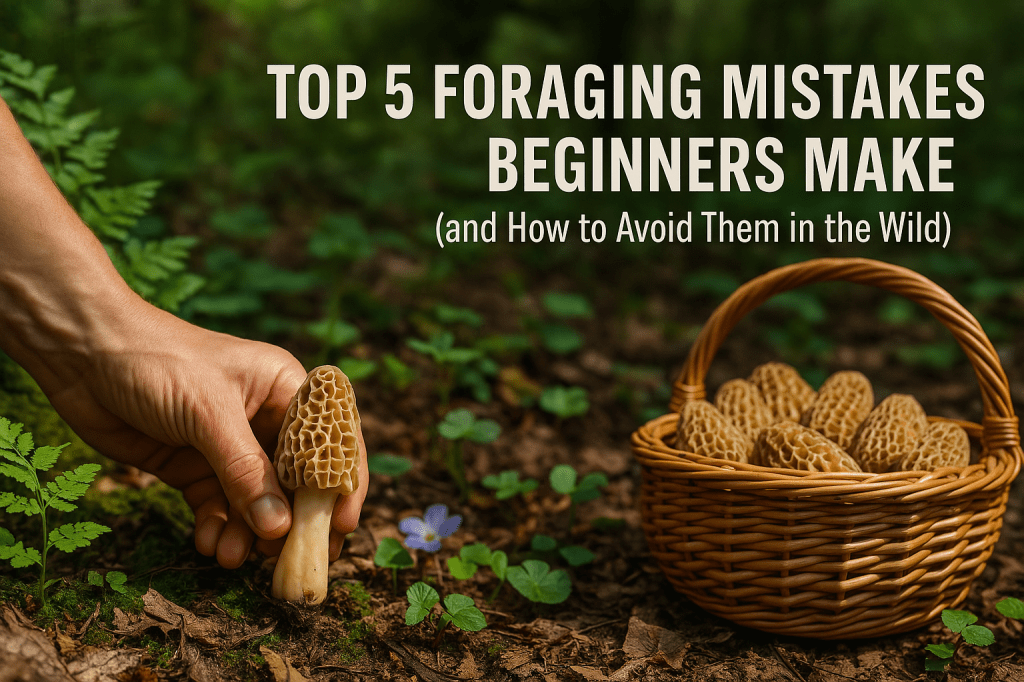
Foraging is a rewarding way to reconnect with nature, eat wild, and find ingredients that can’t be bought in stores. But if you’re just starting out, it’s easy to make mistakes that lead to wasted time, frustration, or worse- unsafe choices. Whether you’re mushroom hunting in the Midwest or gathering wild greens along a riverbank, avoiding these common beginner foraging mistakes can turn a stressful outing into a successful one.
Let’s explore the top five pitfalls new foragers encounter, and more importantly, how to avoid them.
1. Moving Too Fast and Missing What’s Right in Front of You
One of the most common beginner foraging mistakes is rushing. The excitement of the search can cause you to move too quickly through the woods, missing signs of edible plants, fungi, or fruit. Foraging is not a sprint. It’s a slow, observant walk.
When you move quickly, your eyes skim the surface. Mushrooms like morels, ramps, and puffballs blend seamlessly with their surroundings. Rushing also leads to missed environmental cues, like leaf shapes, stem patterns, or animal tracks that might lead to better foraging zones.
How to Fix It:
- Slow your pace intentionally. For every step you take, pause and scan the ground and midline of the forest.
- Look low and then look again. Morels, in particular, often appear hidden until you’re right on top of them.
- Breathe and observe. Foraging is as much about the experience as it is the haul.
Practicing mindfulness in the forest will not only help you find more, it’ll help you enjoy the process more fully.
2. Ignoring Companion Plants and Natural Indicators
If you’re not paying attention to companion plants, you’re missing one of the forest’s most helpful roadmaps. Certain wild edibles tend to grow near specific trees, shrubs, or other plant types. These “companion plants” serve as indicators of soil quality, pH, moisture, and ecological balance.
For example, morel mushrooms are often found near elm, ash, poplar, or dead apple trees. Wild leeks (ramps) love moist, shaded areas with rich, dark soil and often grow near trout lilies and trillium. If you’re searching without looking for these signs, you’re flying blind.
How to Fix It:
- Learn to identify a handful of tree species and their bark. This is especially useful in early spring when leaves haven’t fully emerged.
- Observe the undergrowth. Plants like mayapple or fiddlehead ferns may hint that conditions are favorable for mushrooms.
- Study habitat preferences for your target species before heading out.
The more you read the land, the more it reveals.
3. Spending Time in Unpromising Soil or Terrain
Some places just won’t yield results, no matter how hard you search. Beginner foragers often waste time in poor-quality soil or dry terrain because they don’t yet know what good habitat looks like. Knowing how to read the soil and landscape is just as important as learning the plants themselves.
For example, dry, sandy soil is unlikely to produce mushrooms, while overly dense clay may not support leafy greens. Certain terrain also plays a role. Steep, eroded slopes are typically less productive than low, shaded hollows with moisture retention.
How to Fix It:
- Look for loamy, rich soil with a dark color and crumbly texture. This type of soil is a sign of organic decay, which many edibles love.
- Avoid compacted, dry, or gravel-heavy areas unless your target plant is known to grow in such conditions.
- Check water sources. Streams, ravines, and wetlands are often hotspots for greens and spring mushrooms.
Knowing what to avoid is as important as knowing what to seek.
4. Relying Too Much on Apps or Photos Without Field Experience
Technology is a fantastic tool, but it has its limits. Many new foragers rely heavily on plant ID apps or internet photos and fail to use true morel checklists (Click here to be taken to my ‘Free Printable Resources’ page where checklists can be downloaded and printed). This leads to dangerous assumptions and potentially unsafe harvesting. Nature is full of lookalikes, and no photo can replace the nuanced recognition of smell, texture, and habitat.
Apps may give you a guess based on a blurry photo, but they don’t always account for regional differences or toxic mimics. For example, wild carrots and poison hemlock are visually similar but drastically different in effect.
How to Fix It:
- Use apps only as a secondary tool. Start by studying field guides and attending walks with experienced foragers if possible.
- Take notes and photos of your own finds to build a localized knowledge base.
- Learn lookalikes. For every plant or mushroom you want to harvest, study at least one similar species that you should avoid.
There is no shortcut to experience, but every hour spent learning brings confidence.
5. Harvesting Without Respect or Sustainability in Mind
The thrill of finding wild food can lead to overharvesting. Beginners sometimes take more than they need, pull up entire root systems, or trample the surrounding area. Not only does this harm the ecosystem, it also reduces your chances of future foraging success in the same location.
Sustainable foraging means harvesting with a long-term view. Nature offers abundance, but only if we return the favor with care.
How to Fix It:
- Follow the “rule of thirds.” Take no more than a third of what’s available, leave a third for wildlife, and a third to regenerate.
- Harvest with tools, not hands. Snip stems rather than ripping roots to allow regrowth.
- Leave no trace. Tread lightly and avoid disturbing the surrounding area.
Respect for the land ensures the forest keeps giving year after year.
Final Thoughts: Foraging Is About Patience, Observation, and Respect
The biggest mistake a beginner can make is expecting instant success. Foraging rewards patience, and every mistake becomes a lesson if you pay attention. By slowing down, reading the landscape, avoiding poor soil, studying deeply, and practicing sustainable harvest, you’ll become the kind of forager that nature welcomes.
Whether you’re hunting morels in Michigan, gathering ramps in New York, or exploring forest edges in Wisconsin, these tips apply across seasons and species. Learn to read the forest like a story. Every tree, plant, and patch of soil has something to say.
Bonus: Free Resources for Beginner Foragers
Looking for more help? Here are a few tools you can download or explore:
- Free Printable Foraging Journal Page– Track your locations, discoveries, and conditions
- Free Packing Checklist: – Never forget essential equipment. Print out a checklist and double check your packs before hiking
- Morel Identification Checklist – Learn what characteristics true morels have and identify them without fail
- Morel Season Checklist – Make sure it’s a good time to go morel hunting before planning your forage
You can find all of these and more on the Free Printable Resources & Gear webpage on my site. They’re totally free, no email required. There is also a list of recommended gear in case you are planning a trip.
Want More Tips Like This?
Join my foraging newsletter for:
- New posts every week
- Short stories based in nature
- Morel Foraging tips that will help you fill your mesh bags
Click here to join the newsletter and never miss an opportunity to learn and grow.


 Fantasy & Forage
Leave a comment